
Fleet management and analysis application
Overseeing UX across teams and sprints to optimize and align the experience for a redesigned fleet management application suite.
Role
UX Manager
Team
1 UX Manager, 4 outsourced UX Designers, 3 in-house UX Designers, 4 Development teams, 1 Project Manager
Tools
Axure, Sketch, Adobe Suite, Microsoft Office
Agency
Rightpoint
Overview
”Every accident tells a story.“
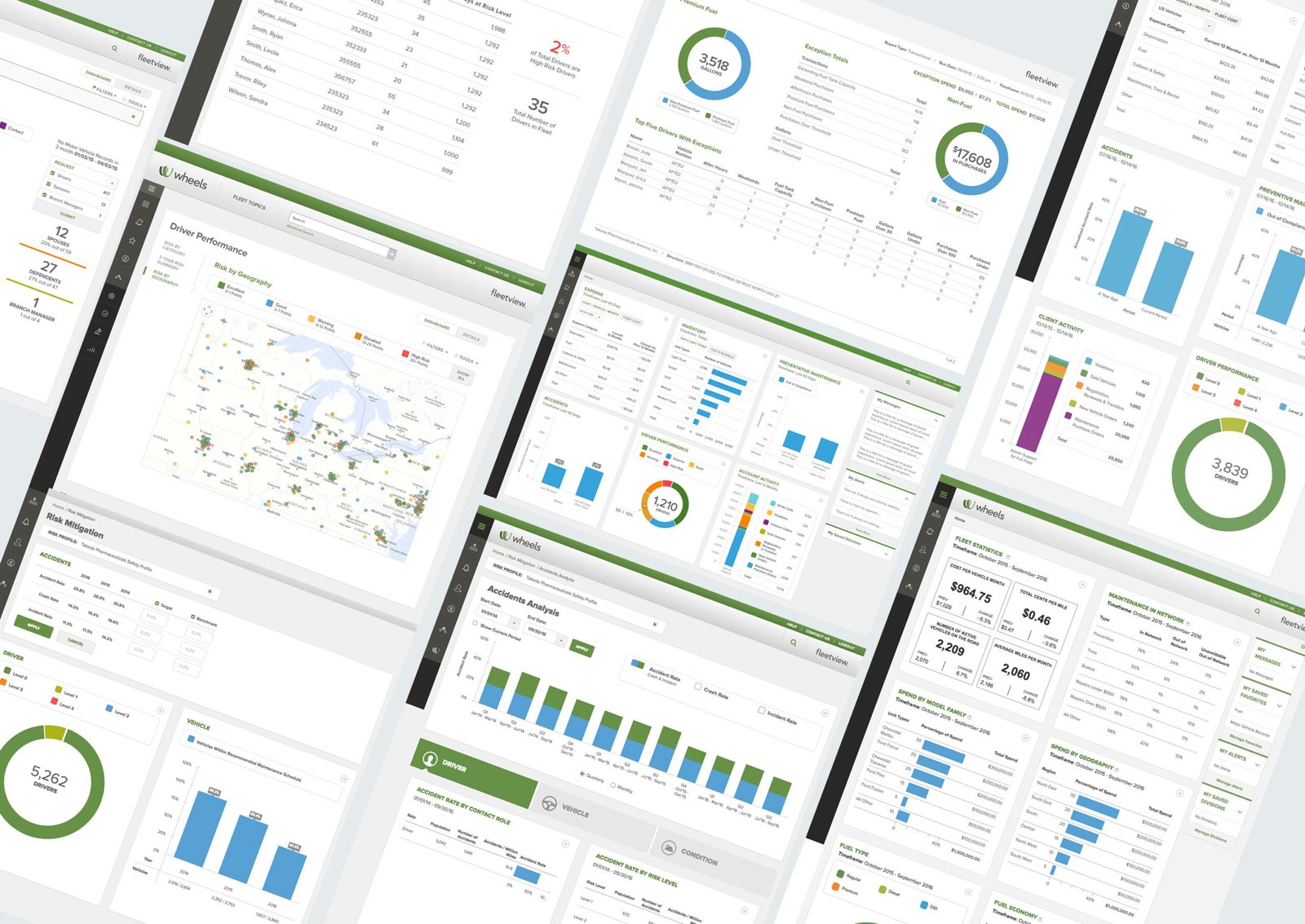
This mantra underlies the critical necessity for accurate and timely reporting to understand the current state of a client's fleet. A 360° view of all sides of a company's fleet, from vehicles, to personnel and drivers, is the key to successful fleet diagnostics and management.
A new dashboard experience was created to serve up this new window into fleet health. Data was pulled from several sources and reporting applications to give employees and there clients a new way of viewing information and a better way to understand the story behind how their fleet is performing at any given moment.
Challenges
- The client had several different tools being used to monitor fleets requiring significant labor to gather and analyze, while also being difficult to update on the legacy platforms.
- Client service agents spend a significant amount of time formatting data into charts for clients as part of regular reviews.
- Production was split across multiple teams working synchronously to deliver different parts of the new suite of tools.
- The client development team was undergoing a shift to an agile workflow, new to the developers and management staff.
Responsibilities
I initially began the engagement in a Senior UX Direction role overseeing a blend of client and third-party UX and Design resources. At any one time this ranged from 5-8 design professionals as well as a couple third-party front end developers. Midway through the engagement, I was tasked with leading the UX effort for the client due to staffing changes and also participated in the recruitment and vetting of a new UX director to be hired by the client.
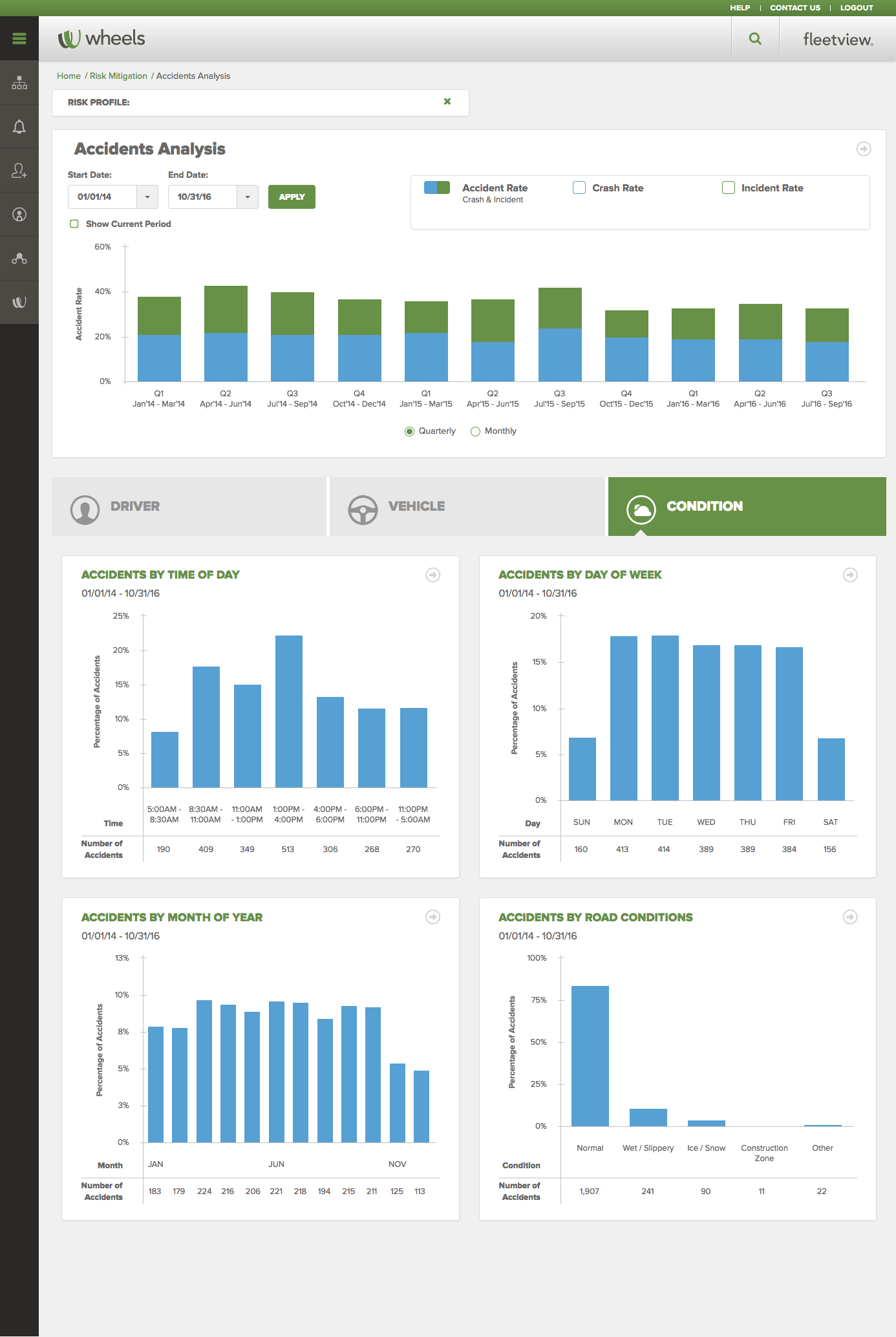
Primary application direction was for the main analytics dashboard, heavily geared towards accident and risk analysis. Additional tools were incorporated during the engagement including updating their reporting engine, fleet inventory management, and order management. Regular, daily coordination with the design team members was vital to success as different designers were assigned to each of the development teams during the agile timeline, and all design and functionality needed to maintain a consistency across the suite of applications.
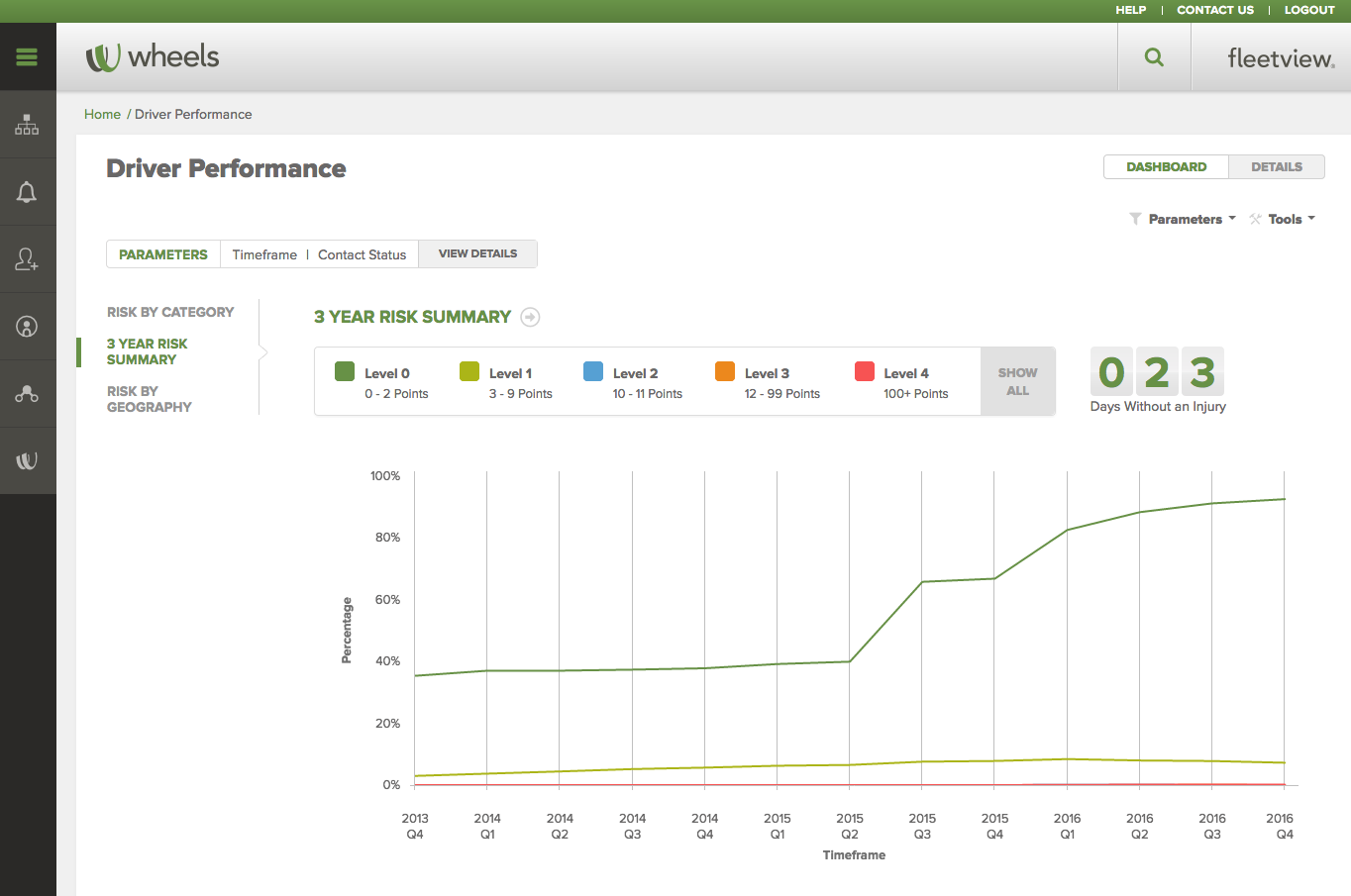
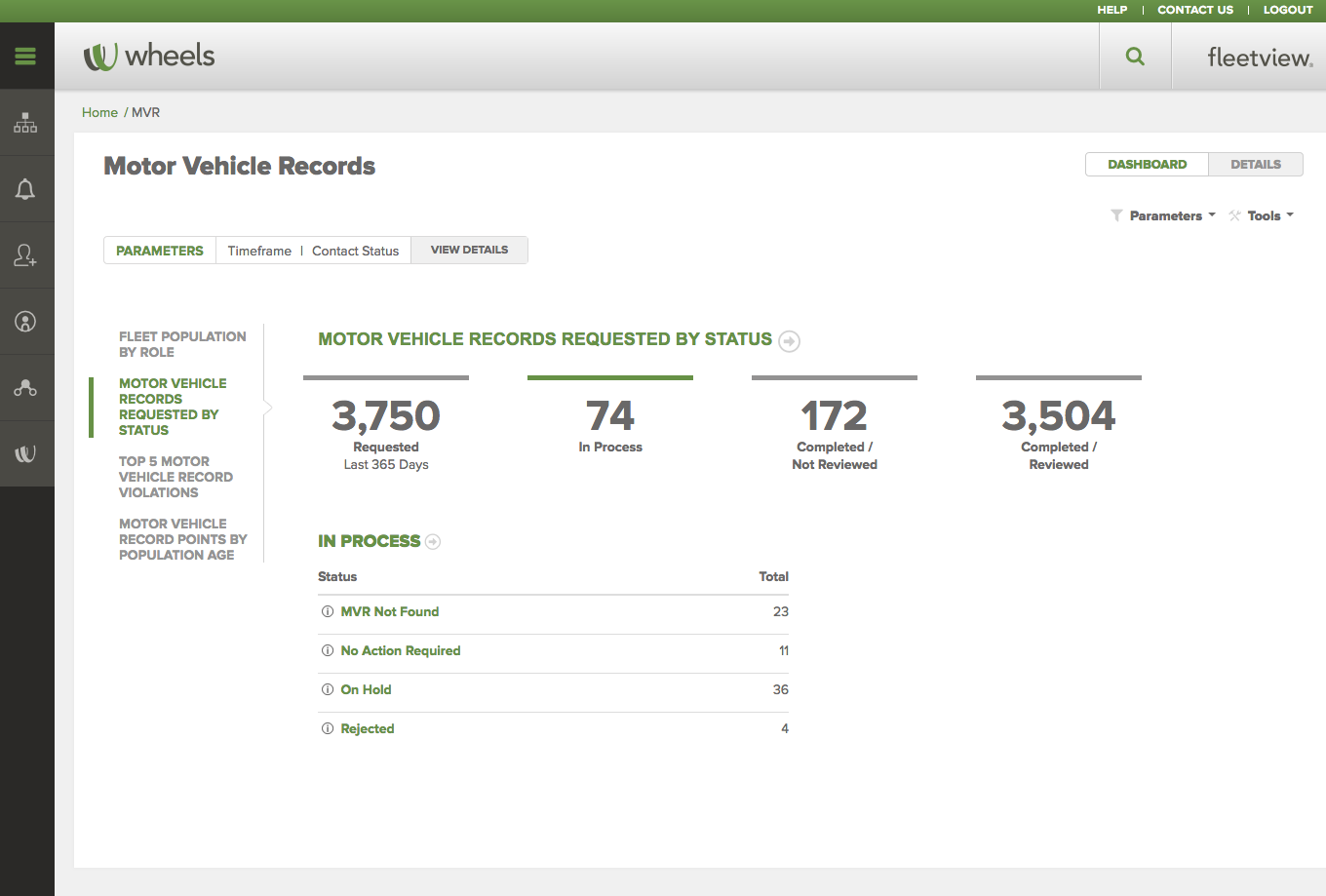
Solution Overview
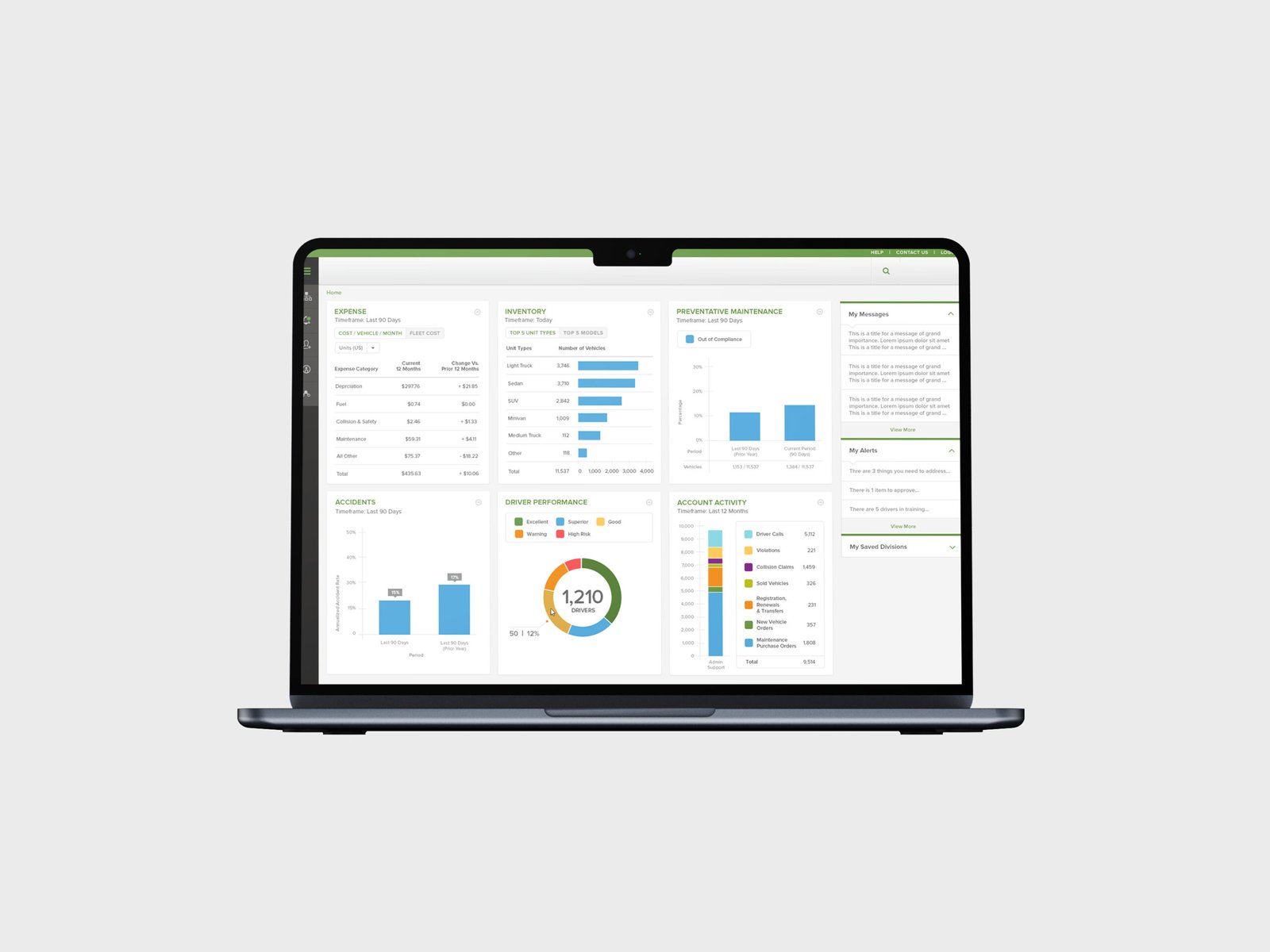
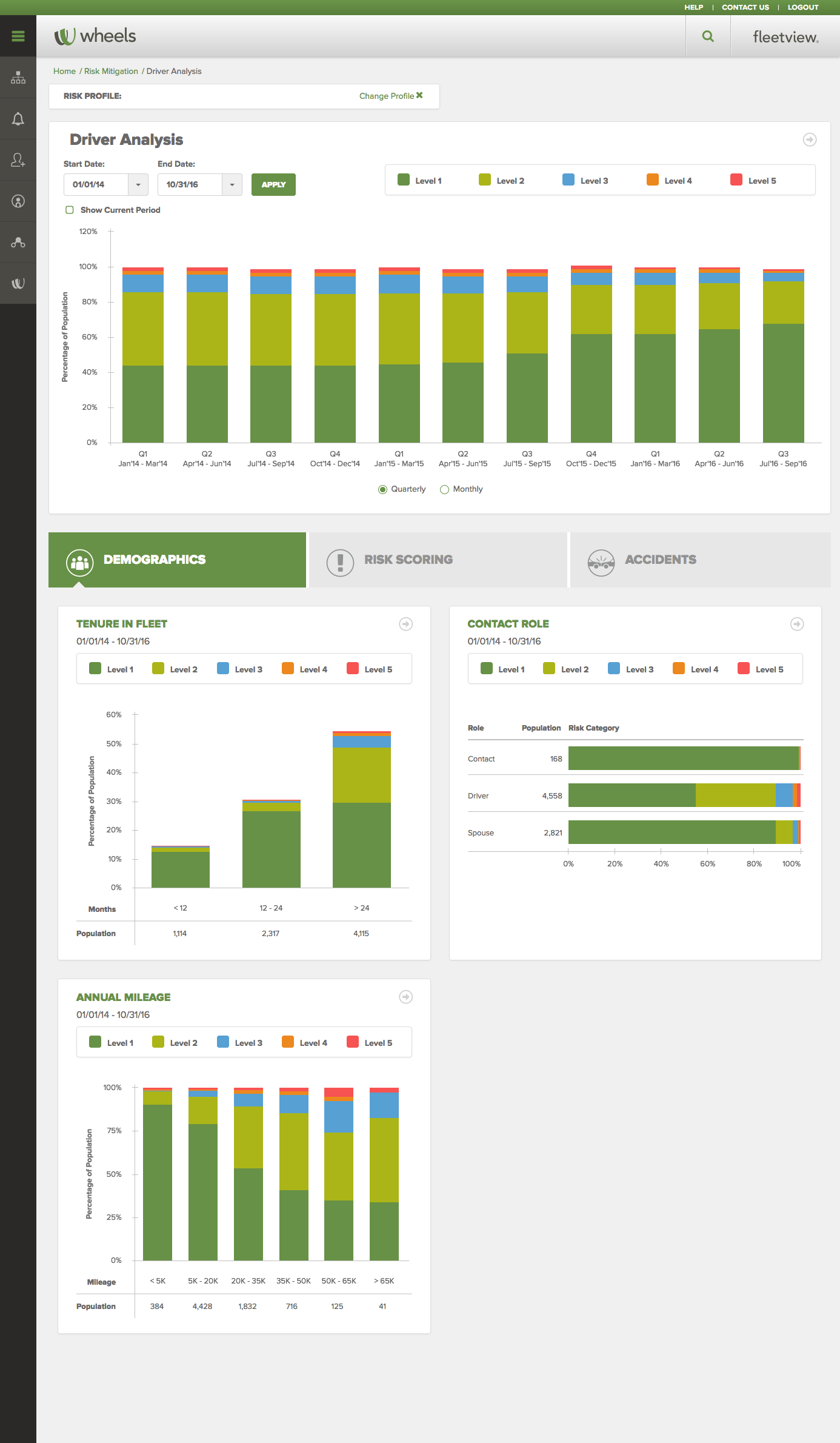
The new platform was centered around a redesign dashboard. Previous versions of the toolset functioned more as a portal to several different applications and tools requiring a deep knowledge about each one and how to use them. The new dashboard vision was to pull this disparate data into one view, combining relevant sources to help paint a clear and engaging picture for the client team. Graphs and charts provide high level views into key concepts with the ability to drill in further, change variables in the data, and output data results from each view for extended analysis. The presentation of key metrics in new charts also optimized the creation of customer reporting and client associates used to spend days and weeks creating, which now could be generated as needed and exported into their presentation documents in minutes. Lastly, the platform was designed to easily scale as new tools were added with each one following the new style guide for consistency.
Approach
My engagement began by picking up previously established strategy planning. The client UX team used Axure as their primary modeling tool, so we continued with that application for initial design and prototyping. As a team, we divided responsibilities to be able to provide focus to each of the 4 development teams working on different parts of the application. Daily participation in dev team scrums and regular UX team reviews were critical to ensuring consistency and quality throughout the timeline. While I had a particular dev team focus, I also served as the product team and executive team liaison to make sure we were meeting operational and business goals.
UX was very lean to provide the agile dev teams guidance each week. The primary challenge here was that the dev teams began working on the product before the UX team was formally engaged, so a lot of effort was put into keeping up and getting ahead of them as best as possible. Additional UX team members were added along the way to help push the design guidelines faster and to continue to cover an increasing number of tools slated for integration.
Functional prototypes were tested regularly with client associates as they were part of our primary audience. Once functionality was confirmed to meet initial objectives, rich visual design was applied to the UX prototypes. Designs wee created in Sketch and inserted into the regular Agile cadence of reviews and demos. These design also formed the foundation for the eventual style guide that was produced by a later designer addition to the team on the client side.
Throughout the engagement, we built upon the learnings of the agile process with the different dev teams and continued to ramp up new tools for the platform. After 3 years, I personally exited the project leaving partner colleagues there to continue the effort alongside a newly formed client-side UX and design team.